Hello, Welcome! Today I have a great recipe for a creamy pasta, loaded with green veggies and pancetta. Blue Cheese Bucatini with Greens and Pancetta. This recipe employs my favorite technique for getting creamy pasta – without using heavy cream. You might recognize this technique of using fat (in this case, creamy Roquefort cheese), the starchy pasta cooking water, and elbow grease to create a silky, smooth, and lightly creamy sauce. Let’s jump right in!
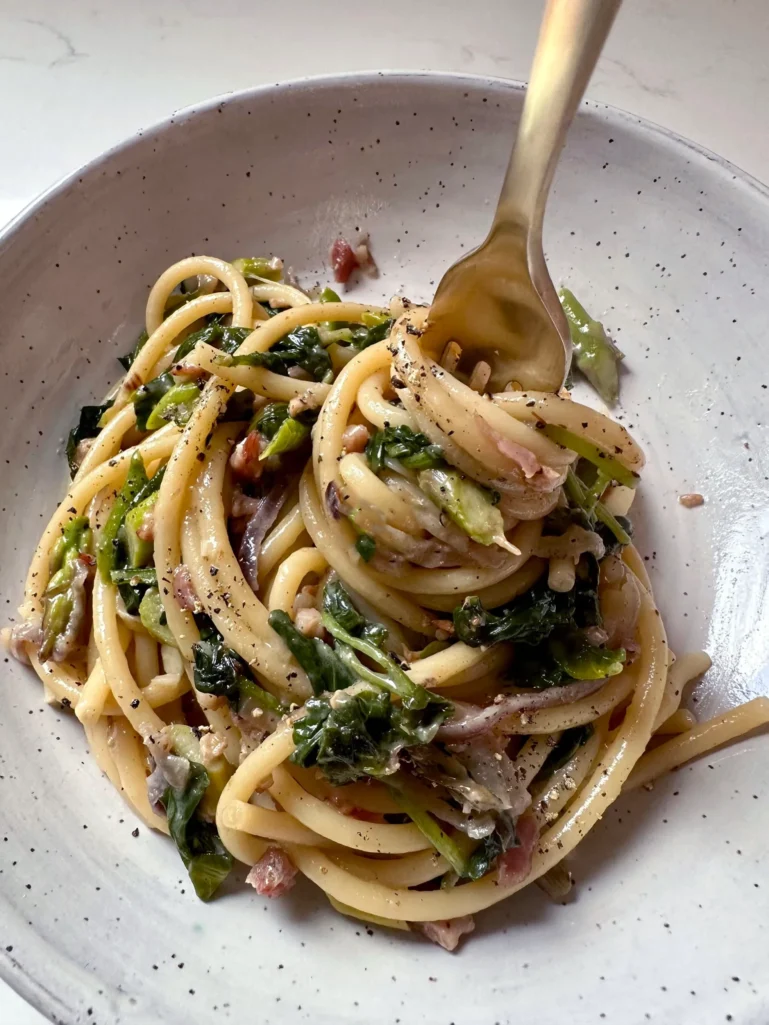
Blue Cheese Bucatini with Greens and Pancetta Ingredients
This recipe is perfect for two, and for me, it was kind of a clean-out-the-fridge pasta recipe. I have 1/2 a bunch of asparagus, sliced small and on the bias; half a bag (or about 4 ounces) of baby kale; one 4-ounce package of pancetta; half of a red onion, sliced thin; and about 3/4 cup of Roquefort cheese.
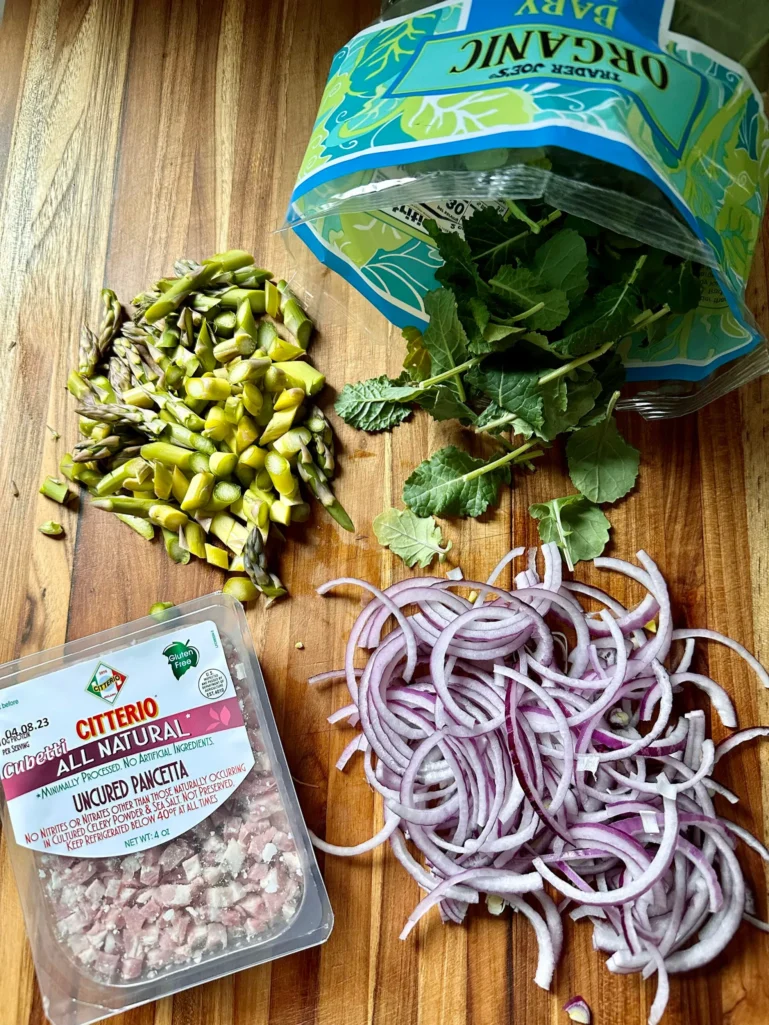
- 1/2 Small Onion, sliced thin
- 2 tbsp. Olive Oil
- 4 oz. Diced Pancetta
- 1/2 Bunch Asparagus, sliced small
- ~4 oz. Baby Kale
- 8 oz. Bucatini Pasta (or spaghetti)
- 3 qts. Water, for cooking the pasta
- 2 tbsp. Diamond Crystal Kosher Salt (1 tbsp. Morton’s Kosher or table salt) for seasoning the pasta water
- 3/4 cup Roquefort Cheese (crumbled by you)
- Cracked Black Pepper
A Note on Roquefort Cheese
Roquefort is a French version of blue cheese. It’s made from sheep’s milk, versus Gorgonzola, which is made from cow’s milk. The sheep’s milk gives Roquefort a sharper flavor, but the blue cheese flavor is milder than Gorgonzola. Another plus about using Roquefort for this recipe is that sheep’s milk cheese melts really well. You want to make sure you are NOT using pre-crumbled cheese for this recipe. The crumbled-by-you block of cheese is creamier and will melt a lot more easily.
How to Prepare Blue Cheese Bucatini with Greens and Pancetta
Step 1: Onions and Pancetta
First of all, get a pot with about 3 quarts of water set over high heat. Cover the pot and let it come up to a boil.
Meanwhile, in a separate large pot over medium heat, sauté the onions in about 2 tablespoons of olive oil. Let the onions go kinda slowly, until they are translucent and begin to turn golden. Then add the diced pancetta. Stir occasionally until the pancetta begins to brown.

Step 2: Asparagus & Baby Kale
Then add the diced asparagus, stir to combine, and then add the baby kale. Stir to combine and as soon as the kale is slightly wilted, cut the heat.

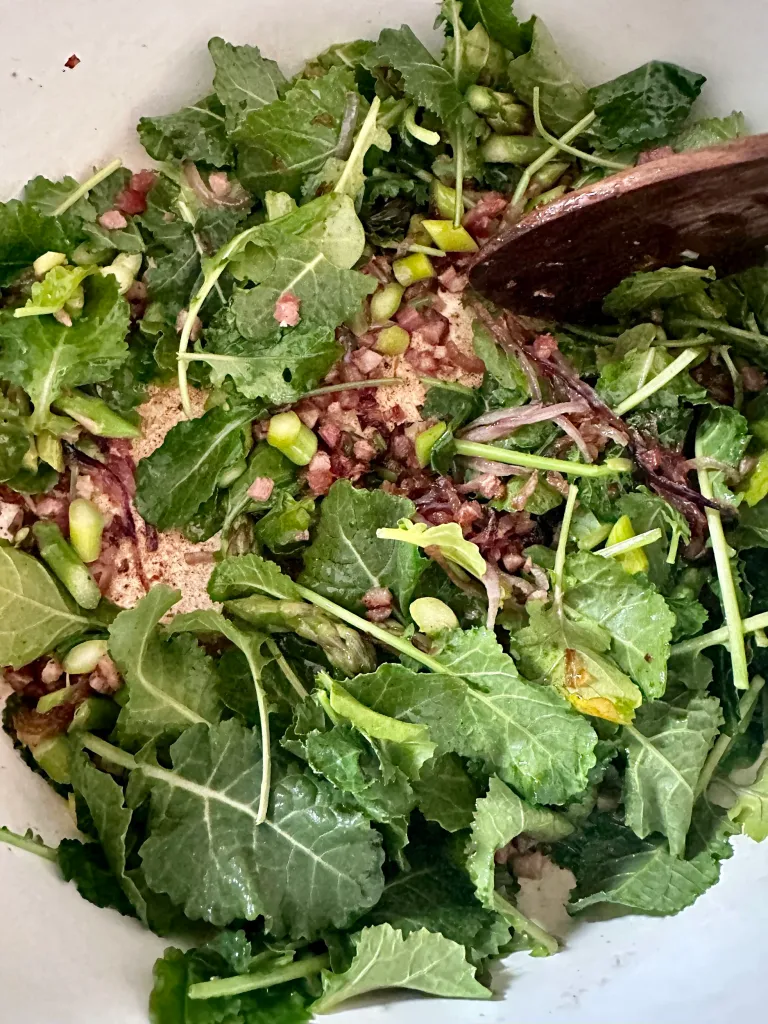
Step 3: Pasta
Turn your attention to the boiling water for the Bucatini. When the water is boiling, add two tablespoons of Diamond Crystal kosher salt, stir, and then add the 8 ounces of pasta. Set the timer for 8 minutes and stir the pasta occasionally.
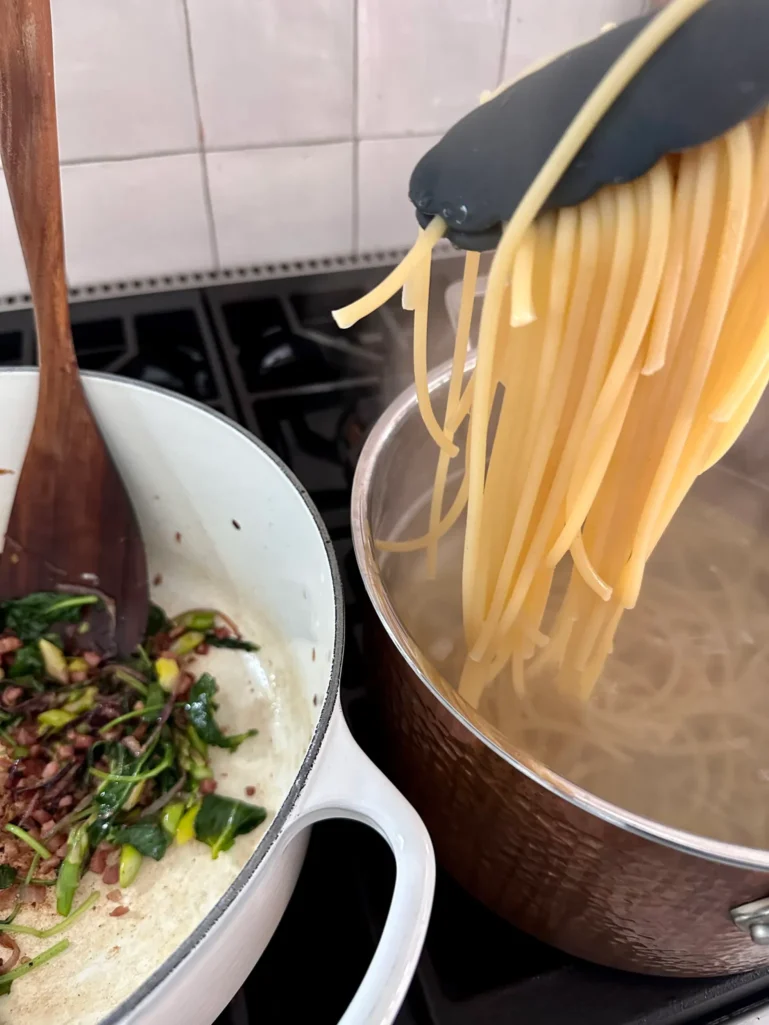
Step 4: Transfer Bucatini
When the pasta is just shy of al dente, cut the heat and carefully slide the pot of pasta next to the pot with the greens and pancetta. Use kitchen tongs to transfer the cooked pasta to the pot with greens. Don’t worry about transferring some of the water as you do this. Then, use a heat-safe measuring cup to scoop out 1/2 cup of the pasta water.
Step 5: Add the Roquefort + Pasta Water
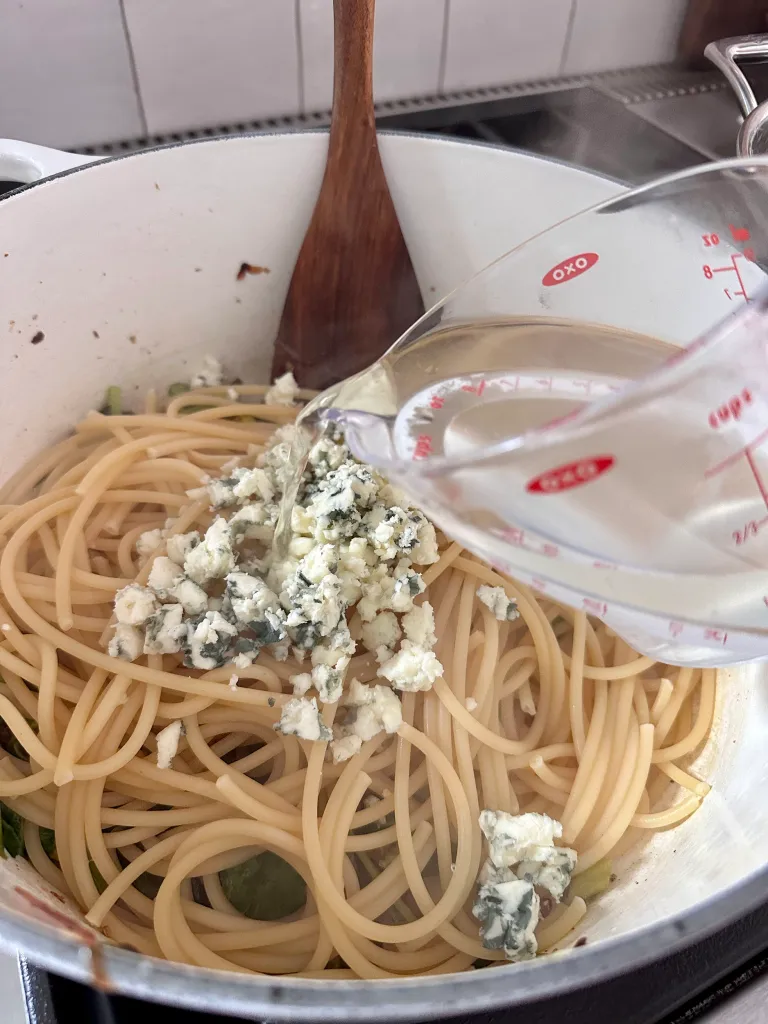
Add the 3/4 cup of Roquefort crumbles and pour the 1/2 cup of reserved pasta water over the cheese. Turn the heat up to medium-low under the pot of greens and pasta, and use a sturdy wooden spoon to stir the pasta into the greens.
Step 6: Stir, Stir Stir!
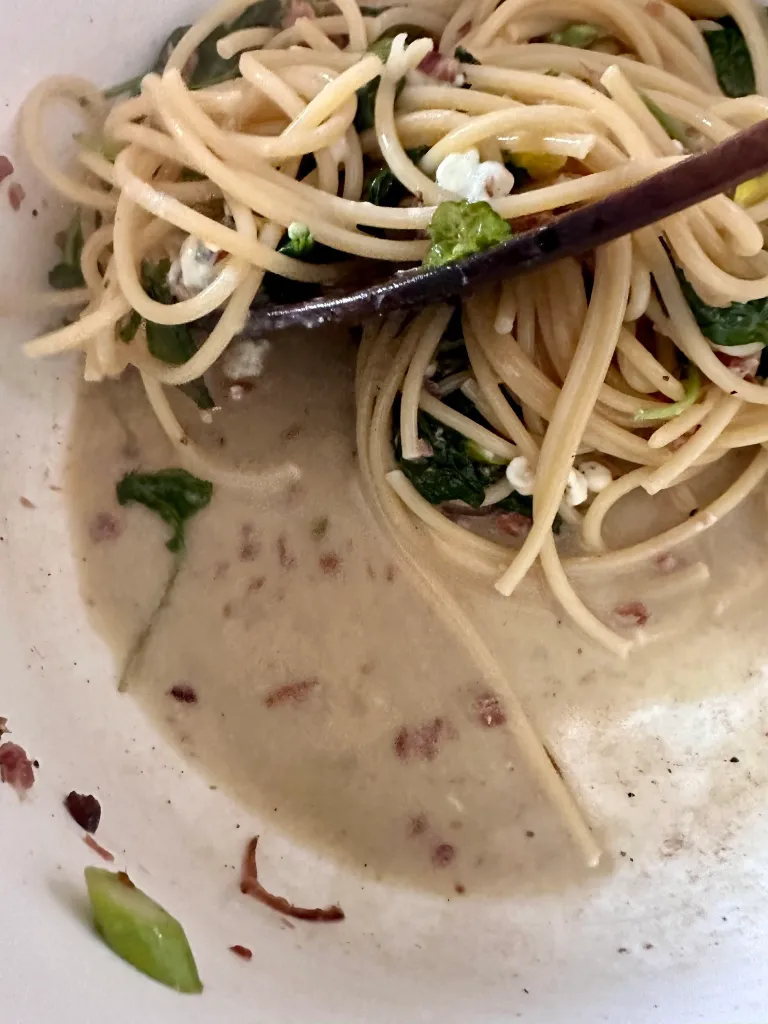
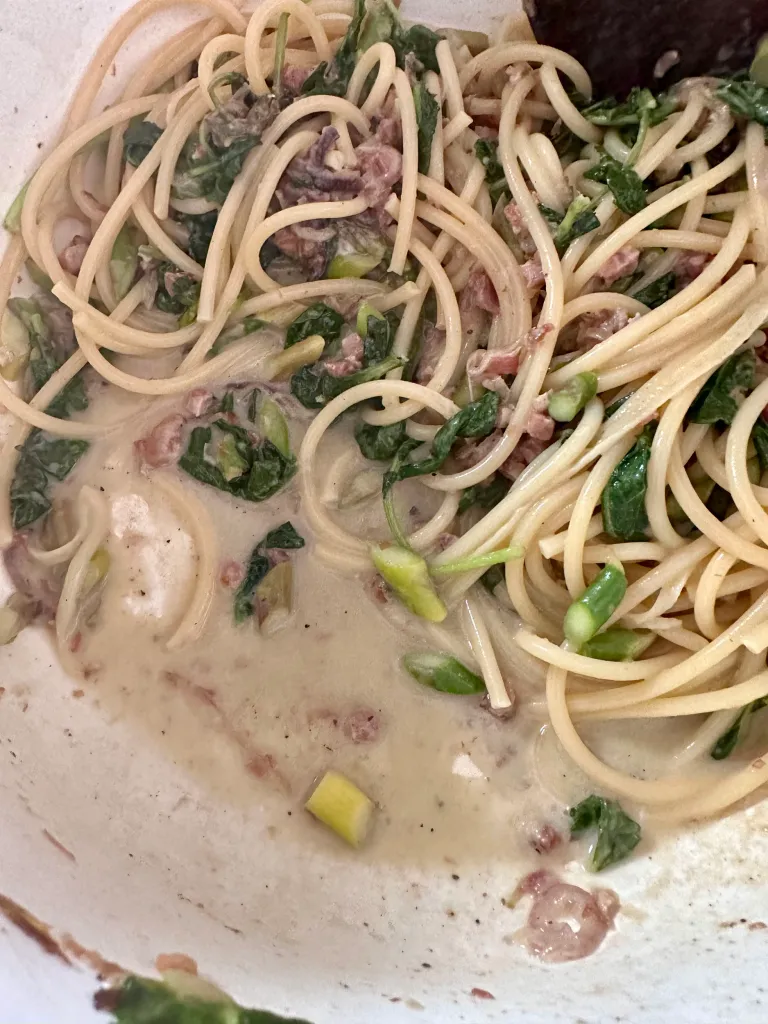
Now, at first, it will look super watery. Keep stirring, and you will see the cheese melt, the water will get absorbed by the pasta, and begin to thicken.
Once you can make a trail in the sauce with the spoon that very slowly fills in, cut the heat and let the pasta sit for about 3 minutes. Just before serving in wide shallow bowls, give the pasta another few stirs. If the sauce has stiffened and isn’t glossy, silky, and smooth, dribble in a little more pasta water to loosen it all up again.
Step 7: Plate it Up!
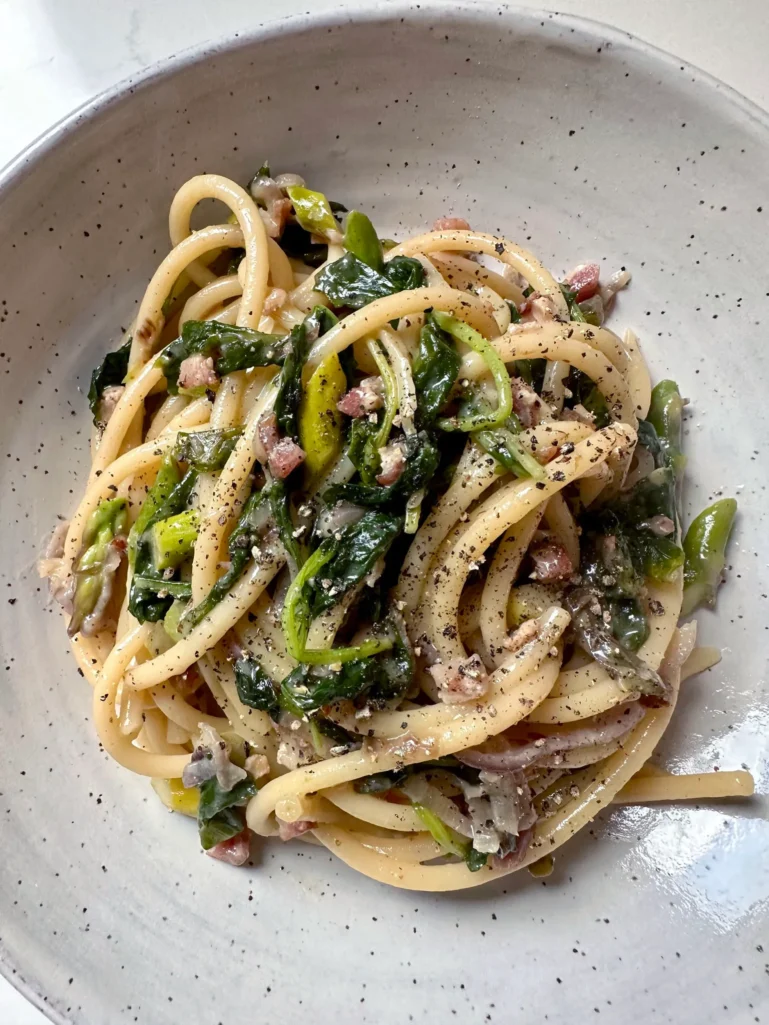
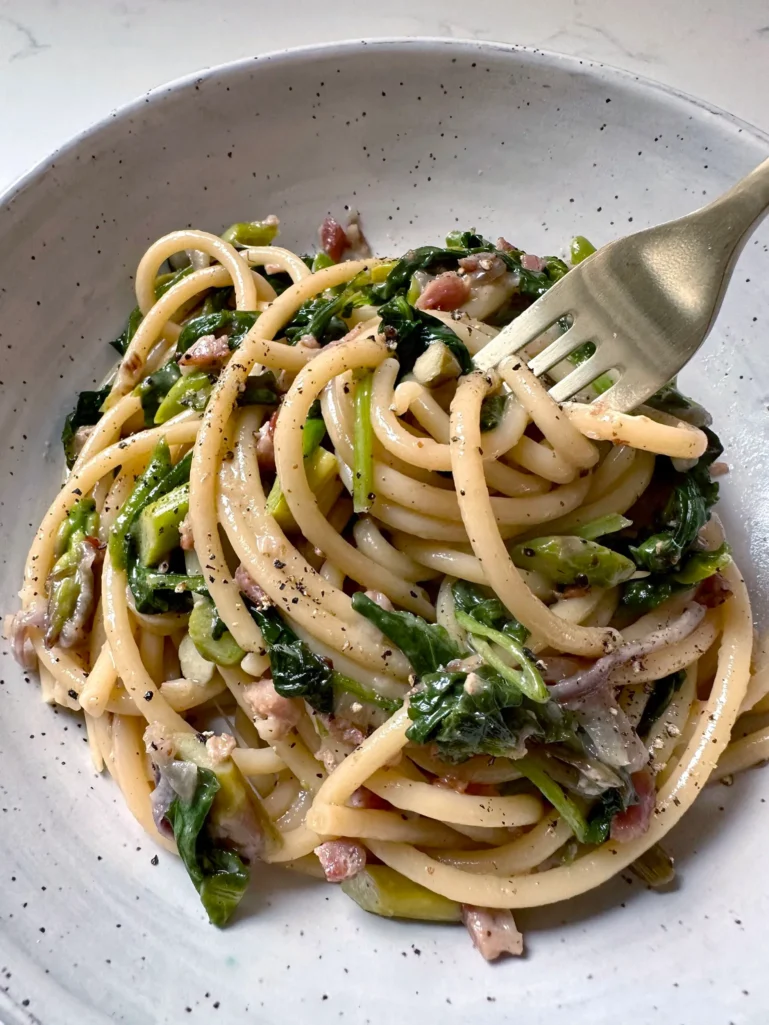
Plate the pasta and top with fresh cracked black pepper.
The flavors of this Blue Cheese Bucatini with Greens and Pancetta are so harmonious! The Roquefort is super light – not overwhelming, the sauce is creamy, but not thick and heavy. The asparagus still has a light crunch, and the pancetta provides a little salty, meaty flavor to each bite. Plus baby kale! Once you master this technique for getting creamy, light pasta, you won’t ever want to have a heavy cream-based pasta again! I have quite a few pasta recipes that utilize this method, try: Pork Ragu with Lemon and Fennel or Linguini with Pancetta & Broccoli.
Take care and be well. xo Kelly
Frequently Asked Questions
Blue Cheese Bucatini
Q. What is Roquefort cheese?
Roquefort is a French blue cheese made from sheep’s milk. It has a sharper but milder blue cheese flavor than Gorgonzola and melts beautifully, making it perfect for pasta sauces.
Q. Can I use pre-crumbled blue cheese?
No, it’s important to crumble the cheese yourself from a block. Pre-crumbled cheese contains anti-caking agents that prevent it from melting smoothly.
Q. Can I substitute a different pasta for bucatini?
Yes! Spaghetti, linguine, or fettuccine would all work well in this recipe.
Q. How do you make pasta creamy without heavy cream?
The key is using the starchy pasta cooking water combined with fat (like cheese) and vigorous stirring. The starch from the pasta water emulsifies with the fat to create a silky, creamy sauce.
Q. Can I make this pasta ahead of time?
This pasta is best served fresh, but you can prep the vegetables and pancetta ahead. The sauce may thicken in the fridge, so add a splash of pasta water when reheating.
Culinary Gift Guide 🎁 + Items Used in This Recipe
- 1/2 Small Onion sliced thin
- 2 tbsp. Olive Oil
- 4 oz. Diced Pancetta
- 1/2 Bunch Asparagus sliced small on the bias
- ~4 oz. Baby Kale
- 8 oz. Bucatini Pasta or spaghetti
- 3 qts. Water for cooking the pasta
- 2 tbsp. Diamond Crystal Kosher Salt 1 tbsp. Morton’s Kosher or table salt for seasoning the pasta water
- 3/4 cup Roquefort Cheese crumbled by you
- Cracked Black Pepper
First of all, get a pot with about 3 quarts of water set over high heat. Cover the pot and let it come up to a boil. Meanwhile in a separate large pot over medium heat, sauté the onions in about 2 tablespoons of olive oil. Let the onions go kinda slowly, until they are translucent and begin to turn golden. Then add the diced pancetta. Stir occasionally until the pancetta begins to brown.
Then add the diced asparagus, stir to combine, and then add the baby kale. Stir to combine and as soon as the kale is slightly wilted, cut the heat. Turn your attention to the boiling water for the Bucatini.
When the water is boiling, add two tablespoons of kosher salt, stir, and then add the 8 ounces of pasta. Set the timer for 8 minutes and stir the pasta occasionally. When the pasta is just shy of al dente, cut the heat and carefully slide the pot of pasta next to the pot with the greens and pancetta.
Use kitchen tongs to transfer the cooked pasta to the pot with greens. Don’t worry about transferring some of the water as you do this. Then, use a heat-safe measuring cup to scoop out 1/2 cup of the pasta water.
Add the 3/4 cup of Roquefort crumbles and pour the 1/2 cup of reserved pasta water over the cheese. Turn the heat up to medium-low under the pot of greens and pasta, and use a sturdy wooden spoon to stir the pasta into the greens.
Now, at first it will look super watery. Keep stirring, and you will see the cheese melt, the water will get absorbed by the pasta and begin to thicken. Once you can make a trail in the sauce with the spoon that very slowly fills in, cut the heat and let the pasta sit for about 3 minutes. Just before serving in wide shallow bowls, give the pasta another few stirs. If the sauce has stiffened and isn’t glossy, silky and smooth, dribble in a little more pasta water to loosen it all up again.
Plate the pasta and top with fresh cracked black pepper.