

The fashion world felt a seismic shift this week as the Prada Group officially completed its long-anticipated acquisition of Versace in a deal valued at €1.25 billion (nearly $1.4 billion). Two of Milan’s most defining forces, one known for intellectual minimalism, the other for unapologetic glamour, now sit under the same roof. And for the luxury industry, this purchase is far more than a financial transaction. It signals a strategic re-anchoring of Italian fashion power.
Prada confirmed the news in a concise, almost understated one-line statement: the deal is complete, all regulatory hurdles cleared. Yet beneath that brevity lies a historic moment that could reshape the competitive landscape for years to come.
Below, we break down the significance of the takeover and what it reveals about the future of both houses…
A New Era for Versace: Stability, Scale, and a Strategic Reset
After years of uneven performance under Capri Holdings, Versace finally enters a chapter backed by the stability and long-term vision of an Italian luxury titan. Prada heir Lorenzo Bertelli steps in as Executive Chairman of Versace, adding to his roles as group marketing director and sustainability chief. It’s the first time the brand will be guided by someone who grew up inside Italy’s luxury manufacturing ecosystem rather than an American corporate structure.
And Bertelli made one thing unmistakably clear: He’s not here for fast, dramatic shake-ups. His focus, instead, is on unlocking what he calls Versace’s “significant untapped growth potential.” Despite being one of the world’s most recognizable fashion names, Versace has often underperformed relative to its cultural reach.
Creative director Dario Vitale, who debuted his first collection at Milan Fashion Week, will continue shaping the house’s aesthetic evolution. His appointment, made even before the acquisition, signaled an internal push for revival long before the sale became official.
Under Capri Holdings, Versace accounted for 20% of Capri’s €5.2 billion revenue. Within the Prada Group’s pro-forma structure, the house will represent 13% of total revenues, a significant slice for a group that generated €5.4 billion last year. This time, Versace’s relaunch comes with real financial muscle behind it.
Prada’s Strategic Play and the Absorption of Versace Into Its Manufacturing Powerhouse
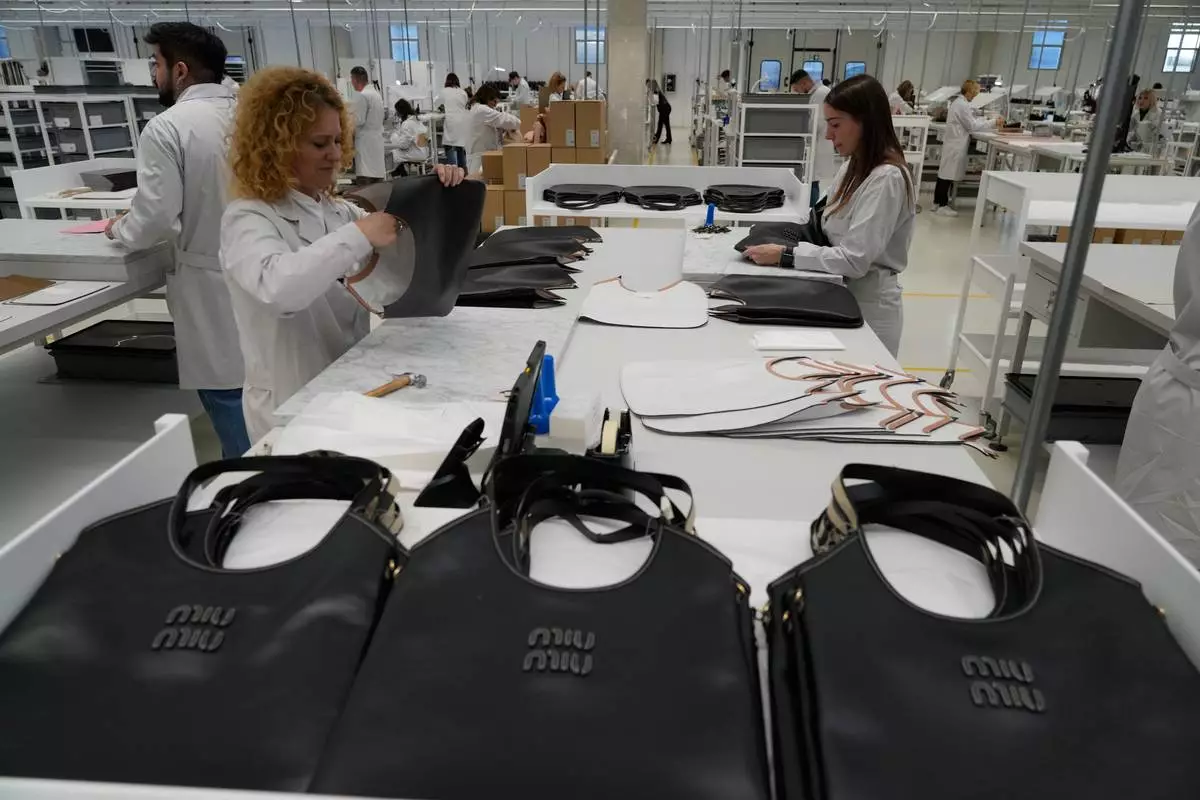
Prada’s greatest leverage has always been its meticulously built, deeply Italian manufacturing ecosystem. It’s a feat Versace has never achieved at the same disciplined scale. That advantage is already shaping the future of both brands. At the group’s Scandicci leather goods facility, the same hub responsible for Prada and Miu Miu’s most coveted handbags, Bertelli confirmed that Versace will soon enter the production stream. His philosophy is simple: the craftsmanship doesn’t change; only the signature on the final piece does.
This year alone, Prada’s supply-chain strength has expanded through major investments: a €60 million facility upgrade, a new leather goods factory near Siena, a knitwear plant in Perugia, renewed energy in Church’s UK footwear production, and multiple expansions across Tuscany. All this is supported by €200 million invested between 2019 and 2024. Reinforcing this ecosystem is Prada’s artisan training academy, which has shaped 570 craftspeople over 25 years, with 70% of last year’s cohort joining the company full-time.
This is heritage refined through structure, scaled through discipline, and now positioned as the engine that Versace gains access to.
How This Redefines the Luxury Power Map and Strengthens Italy’s Global Position
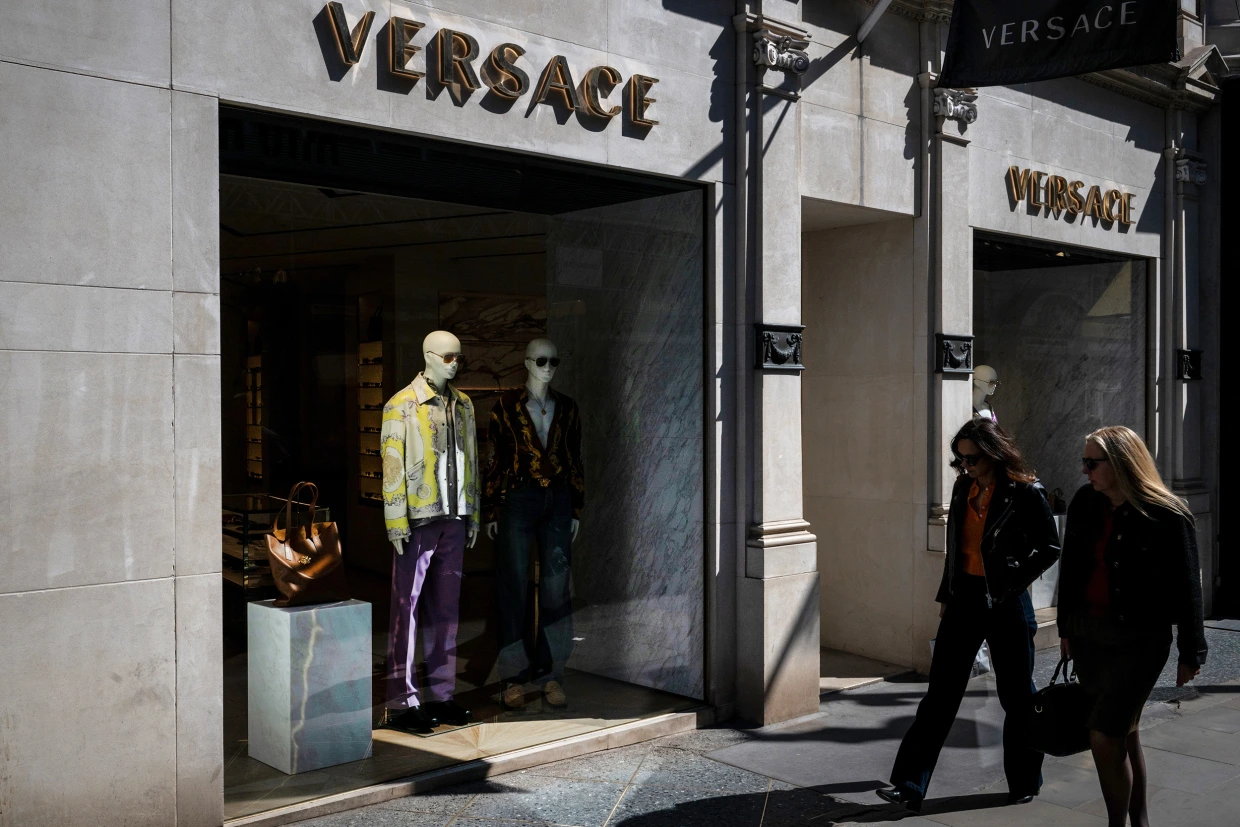
Luxury consolidation is nothing new, but the Prada–Versace alignment represents a turning point for Italy. For the first time, two of the country’s most culturally distinct houses—Prada’s cool, intellectual authority and Versace’s bold sensuality—enter the same strategic orbit. The impact extends well beyond shared ownership.
This move strengthens Italy’s stance against the French conglomerates that have dominated the narrative for decades. It also restores Versace’s Italian identity after years under Capri Holdings, where the brand often had to navigate the tension between American corporate expectations and its own creative DNA. Under Prada, that identity isn’t merely protected. It is re-anchored.
Strategically, Versace now has room to grow without being coerced into “quiet luxury,” a trend that once pushed Capri to make positioning decisions that dulled the brand’s natural fire. Prada understands that maximalism, glamorous, celebrity-driven, unapologetically bold, is not Versace’s weakness. It is the essence of the house.
Together, Prada, Miu Miu, and Versace form a three-house constellation that strengthens Italy’s competitive edge. Prada commands refined minimalism, Miu Miu channels youthful trend energy, and Versace remains fashion’s most glamorous symbol of pop-cultural luxury. Each house speaks to a different audience, yet they complement one another rather than collide.
The Bottom Line: A Takeover That Honors Identity Without Dilution
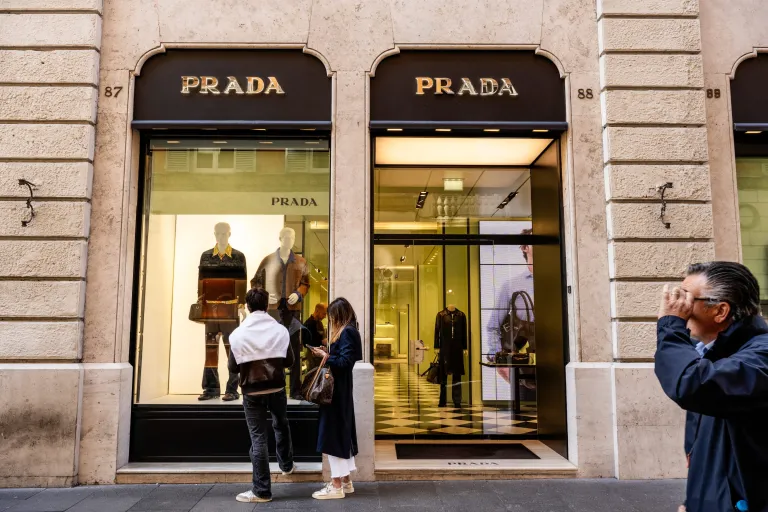
There’s a reason this acquisition is being described as a “new era” rather than a takeover. Prada isn’t trying to make Versace quieter, safer, or softer. Instead, it’s giving the house infrastructure, capital, and strategic patience. These are three elements it has lacked for years.
At 47 years old, Versace remains one of the world’s ten most recognized fashion names. Under the Prada Group, it finally gains the operational backbone to match its myth. Now, the fashion world waits for what comes next. A Versace with the resources to dream bigger, produce better, and reclaim the cultural dominance that made it a ’90s and 2000s icon.
If this merger unfolds as Prada intends, Italian luxury isn’t just competing with Paris anymore. It’s leading.
Featured image: Getty Images
Brand Wars: Versace Hits Fashion Nova With Lawsuit
